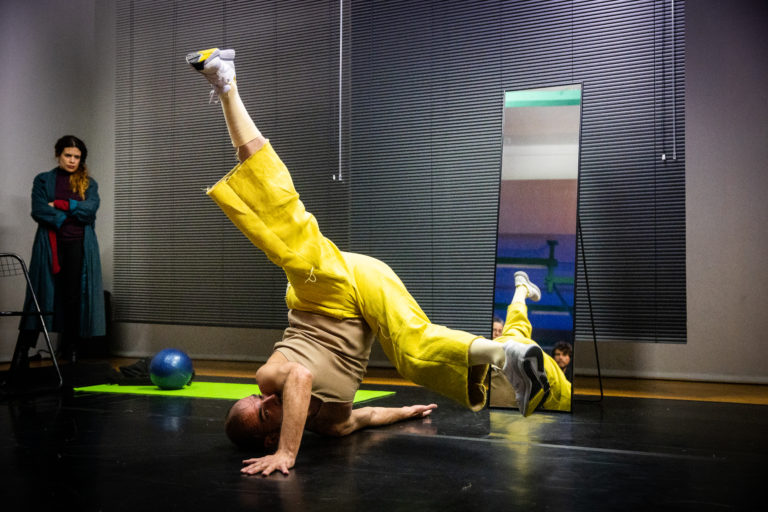
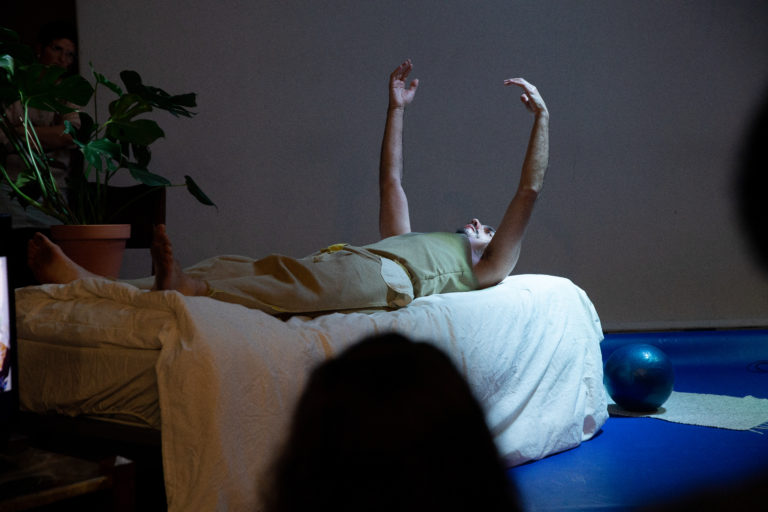
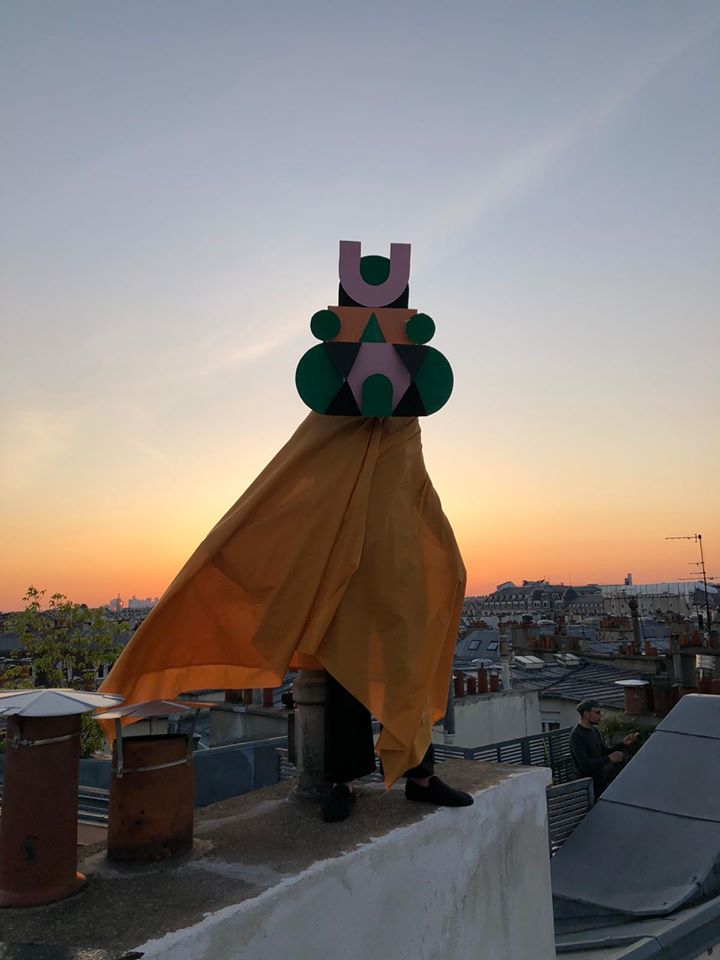
Joe Delon performs in Dança Sem Vergonha

Dança sem Vergonha


“Shameless Dance”

Joe Delon will perform in the contemporary dance piece “Dança Sem Vergonha” by choreographer David Marques, as part of the Materiais Diversos festival in Rome. After a sold-out premiere on the opening weekend of Festival Cumplicidades at Lisbon’s Rua das Gaivotas 6, the piece will now be shown at La Pelanda at 22h15 on 10 September. Joe‘s live DJ set features released and unreleased music by artists including Evano, Lerosa, Gwenan, Hiroma Keo, Raw Forest and Joe (Hessle Audio/Cómeme).

David Marques in his Dança Sem Vergonha explores the motor and cultural imaginaries linked to dance but from an intimate position, specifically that of his own room, in which “without shame” he indulges in dance and self-expression, confusing the plane of time and of space, public and private.

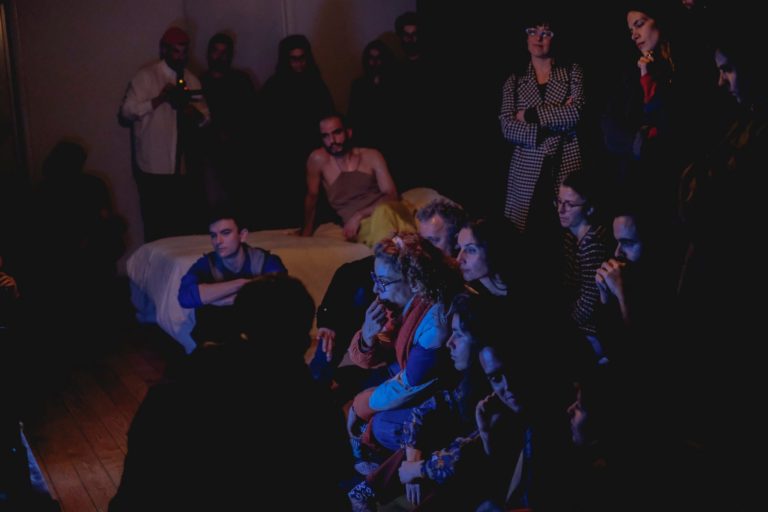
“Over the last few years I have been looking for ways and reasons to dance. I found the same pleasure both in dancing at home, in the studio and in the clubs, which pushed me to keep going. In front of few or no witnesses, this pleasure-motivated dance seemed to arise amidst unrestricted musical formalism and emotional expressiveness. Perhaps my ‘shameless dance’ exists exclusively in the theater and is only possible by crossing different spaces, times and motivations: the bedroom that I associate with childhood, the club of adolescence and the study of adulthood. Finally, the theater that I associate with the present, during a performance, by both spectators and other performers. This sensation / dance is immediate and meditated, simple and complex, referential and naive, abstract and symbolic, serious and fun.”

Perhaps my ‘shameless dance’ exists exclusively in the theater and is only possible by crossing different spaces, times and motivations

AUDIO TRANSCRIPTION:


Danca Sem Vergonha also talks about the possibility that choreography has to change over the course of the piece: through the dance of our bodies, mine and those of the audience – which can be seen and felt for an hour. Anything that viewers take with them will be part of what the play is about, or maybe it has always been part of what the play has always been about. Surely the piece also speaks of the unmentionable things that viewers brought with them when the piece was staged in March in Lisbon.

Who or what – real or imaginary, present, past or future – do you think contributed to the birth of this work?

I think Joe (Joe Delon, the DJ on stage with me) contributed on many levels to the creation of this work, and not just because he was involved in the process from the very beginning. As a friend of mine he already followed my work, and ideas discussed with him ended up being the source of Danca Sem Vergonha . His approach to music and his shy nature and presence have been and still are a source of inspiration for me and for this dance. The object I choose is a vinyl by Lena D’Água (the singer we hear at one point in the play) that Joe gave me a couple of years ago.

What do you imagine will you say about this job in fifteen years? And fifteen years ago, would you ever have imagined doing it?

I have no idea what I will say about this work in fifteen years, but if I look into my crystal ball I see that I will say that I was a bit too polite in my approach to  Danca Sem Vergonha and that I was not aware of the melancholy of the piece as it I wore on stage. And yes, I think I actually started imagining this piece fifteen years ago, a little at a time… maybe I really have divinatory powers!

David Marques (Portugal, 1985) is a performer and choreographer. His work questions the issues of gaze and time, trying to create spaces for unlikely relationships on stage. He trained at the Escola Superior de Dança – IPL in Lisbon and at the Center Chorégraphique National de Montpellier . His individual works are Motor de Busca , KIN , Conquest , a choreographic adaptation of a score by Deborah Hay and Dança Sem Vergonha . With Ido Feder he developed the trilogy Bête de Scène / Images de Bêtes / THE POWERS That B and with Tiago Cadete Apagão. He runs seminars and occasionally teaches at institutions such as the Escola Superior de Dança – IPL, the Jerusalem Academy of Music and Dance and Danslab Brussels. He is the founder of PARCA.

davidmarques.org

creation and dance David Marques
DJ live set Joe Delon
space Tiago Cadete
video Diogo Brito
costumes Tiago Loureiro
external eye Patrícia Milheiro
technical direction Gonçalo Alegria Estúdios
residences Victor Córdon and EIRA / Teatro da Voz

Organization and administration Vítor Alves Brotas
Production PARCA together with AGÊNCIA 25
Co-production PARCA and EIRA / Festival Cumplicidades
Support Curtas de Danca 2019 – DDD Festival Dias de Danca (for video development), Self-Mistake – Experimentation Scholarship 
— as part of More Than This © Alipio Padilha

Basic Moves’s 13th record by Signal Kommt is out now.

Signal Kommt

"Basic Move 13"
[BM13]

Basic Move‘s 13th release is out now, and features six original works from the Uruguayan talent Signal Kommt, aka Z@P. The 2xLP is the humble result of a love for sharing, patience and pure dedication to underground club culture. 

“In Uruguay the public is very ​open and curious about all sounds​ 

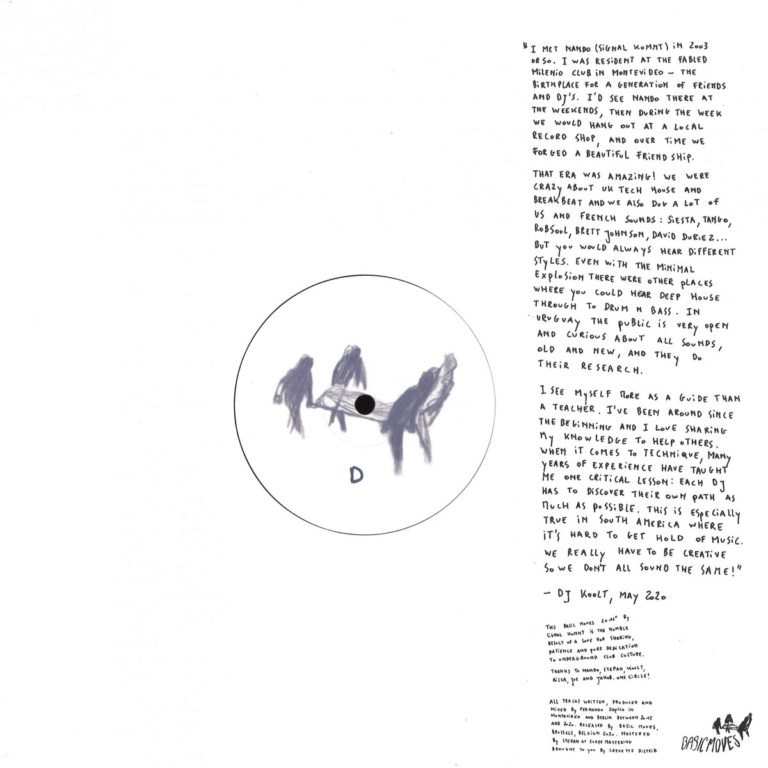
“I see myself more as a guide than a teacher. I’ve been around since the beginning and I love sharing my knowledge to help others. When it comes to technique, many years of experience have taught me one critical lesson: each DJ has ​to discover their own path​ as much as possible. This is especially true in South America where it’s hard to get hold of music. We really have to be creative so we don’t all sound the same!”

DJ Koolt introduces Basic Moves 13:

“I met Nando ​(Signal Kommt)​ in 2003 or so. I was resident at the fabled Milenio Club in Montevideo – the birthplace for a generation of friends and DJs. I’d see Nando there at the weekends, then during the week we would hang out at a local record shop, and over time we
forged a beautiful friendship. That era was amazing! We were crazy about UK tech house and breakbeat and we also dug a lot of US and French sounds: Siesta, Tango, Robsoul, Brett Johnson, David Duriez… But you would always hear different styles. Even with the minimal explosion there were other places where you could hear deep house through to drum n bass. In Uruguay the public is very ​open and curious about all sounds​, old and new, and they do their research.”


Rotate 007 – Luc Ringeisen & Suburbial – Jamming

Luc Ringeisen & Suburbial

"Jamming"
[ROTATE007]


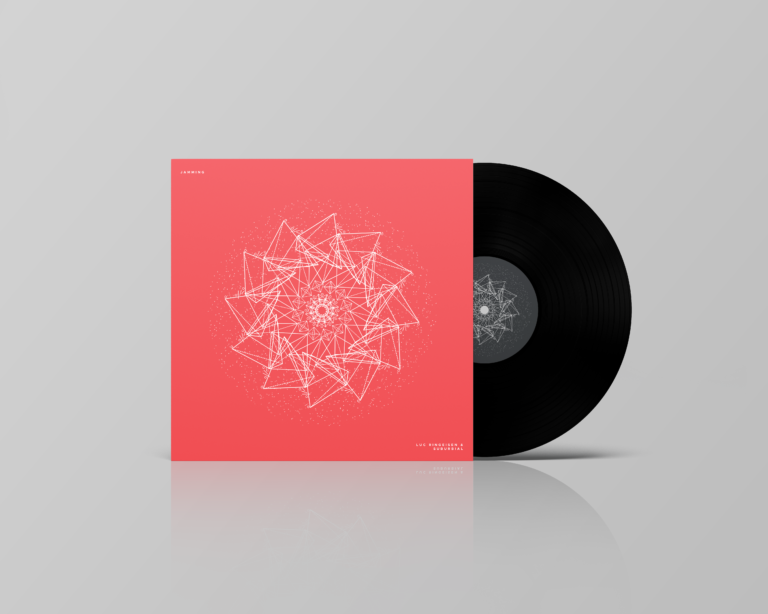
“Rotate’s seventh release brings a collaborative project between in-house artist Luc Ringeisen and newcomer on the label, Suburbial.”

[Rotate007] Luc Ringeisen & Suburbial

‘Jamming’ 12″

A1 Skyline – Aktivität (09:57)
B1 Simple et Precis (06:15)
B2 Bonhomme de Chemin (06:14)

Written & produced by Luc Ringeisen & Javier Baz
Mastered by Lopazz
Artwork & Design by Max Binski
A&R by Andrea Martinez & Denise Gluck 
Manufactured at RAND Muzik
Distributed by Word and Sound Distribution
Rotate Recordings 2020

Joe Delon – Ghostcast

“Ghostcast by Joe Delon”

From Lisbon with love. Pour yourself a glass of something and let Joe’s fabulous mix spirit you away.

Dynamic Range: The 9th Passenger Aboard the Nostromo

Dynamic
Range: 
Unveiling the Invisible 9th Passenger
Aboard the Nostromo 

Words by Bruno Santos aka Cleymoore
Reading time: 16 minutes


This is an essay on the role of sound and music in our inherent perception of fantasy films, taking 1979’s “Alien” as the main subject.
Although the article contains no spoilers, at least one viewing of the movie is recommended before reading. 


Celebrated and admired throughout history, cinema is a peculiar but expansive source of both wonder and outstanding inspiration. Being exposed to a world different from our own can be a mesmerizing experience, one that has the power to influence entire generations. Audio-visual experiences that transcend time & space.

Consider the Science Fiction genres: We were used to marveling at a reality that was different from ours, but ever since we landed on the Moon in 1969 our cinematic depictions of space started to seem ever more uncanny. Back in 1979, the science-fiction horror film “Alien” directed by Ridley Scott and written by Dan O’Bannon hit the cinemas with moderate success. Dubbed “Alien: The 8th Passenger”, it follows the crew of the commercial spacecraft Nostromo, who encounter the now-iconic Alien, a deadly and primal extraterrestrial being, in an unknown planetoid after receiving a distress signal. It was undoubtedly the most terrifying film I’ve experienced during my childhood. 

Fast-forward to 2020, and SpaceX is also shooting people into space in a commercial aircraft, and I can’t help but wonder how familiar it all seems. But science-fiction is a hefty topic. Instead, I want to explore and dissect the role of sound and music in our inherent perception of fantasy films and explore why “Alien” was, and still is, a terrifying Sci-Fi tale.

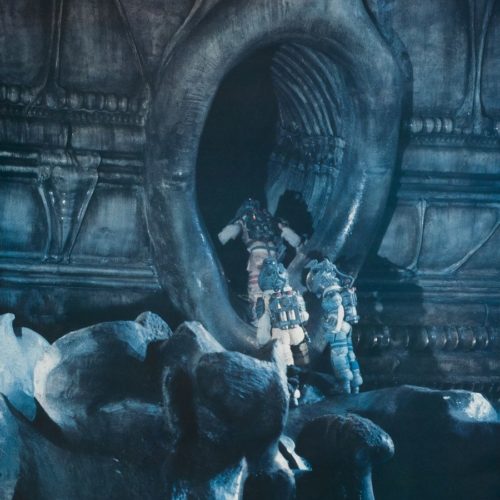
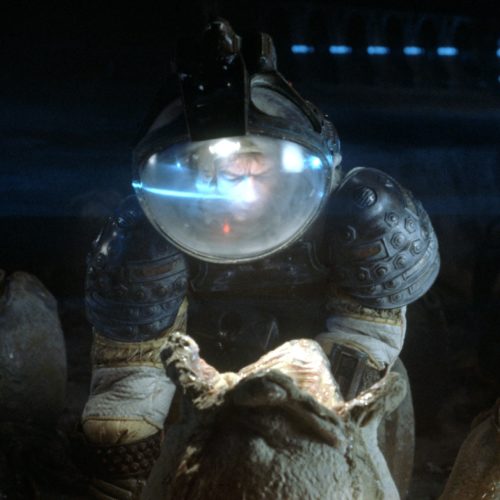
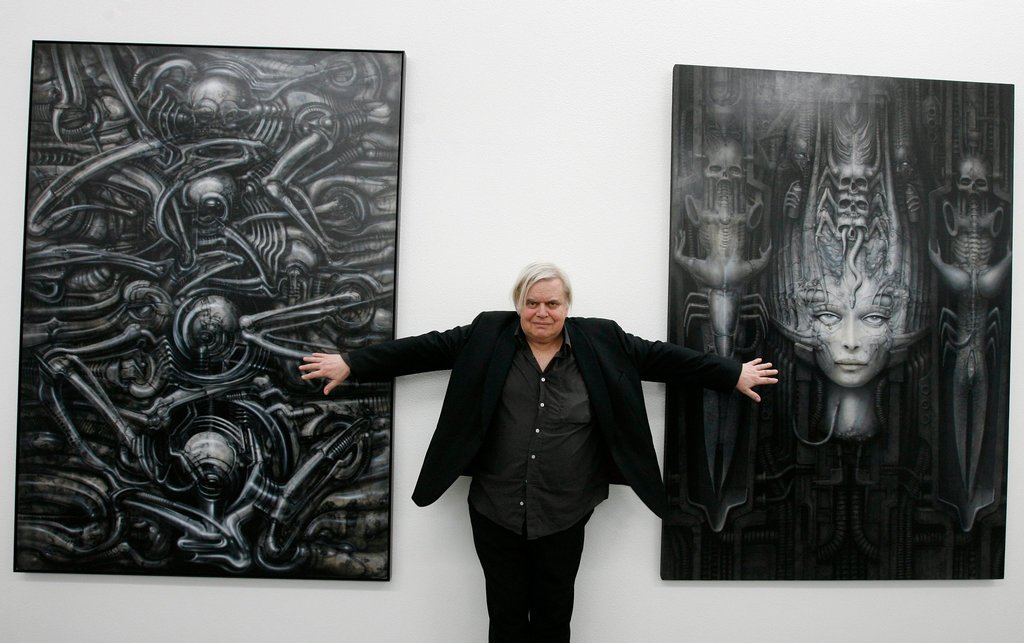
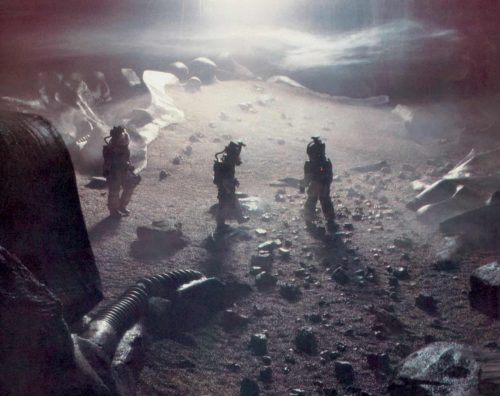
Alien is a film about primal fear – namely, the fear of the unknown – and every character and set piece in it has a life of its own. The visual aesthetics adopted by Ridley Scott for the spacecraft Nostromo and its interiors are quite grim: Massive engines and weirdly shaped structures, hulking pieces of unstylish sharp metal, long dark corridors, hanging chains everywhere as if looking into metal gibbets, bizarre hypersleep gear and obsolete CRT display screens. These are shockingly contrasted by bleak interior design structures of the purest white, reminiscent of the sterility found in most of “2001 Space Odyssey” spaceship scenes, providing a powerful dynamic range to its visuals. The look and feel of the planetoid LV-426, The Derelict and the ominous Alien itself were all H.R. Giger’s creations. The interior of the Derelict, by comparison, resembles more a living organism than a spacegoing vessel, with bony walls, circular gangways, narrow passages, and extremely sexual undertones. 

“every character and set piece in it has a life of its own”

Giger’s perversion over nature and matter echoes throughout the entire film, and it’s arguably one of its most unsettling elements. It’s also a quite visceral film, depicting violence that’s not only graphical but also profoundly symbolical: there’s allusions of rape in the Alien’s highly sexualized attacks or the Facehugger’s forced impregnation, grotesque depictions of childbirth agony in the famous Chestburster scene, and nods to extreme sexual transfiguration in the Alien’s visual motifs and artefacts, often shifting the whole setup to the Freudian realm. But there’s another element in particular that drives this discomfort to new heights: the sound, and it’s outstanding dynamic range.

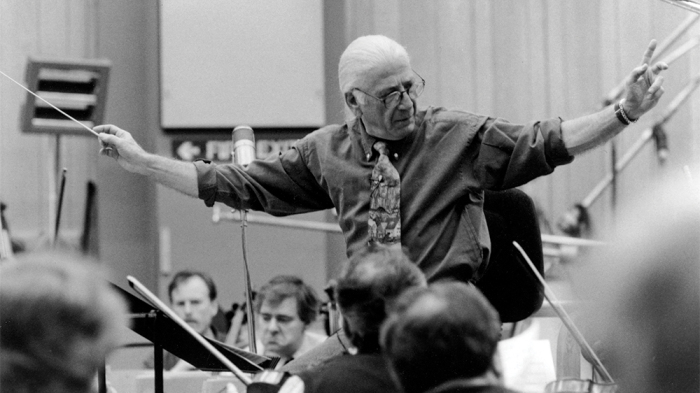
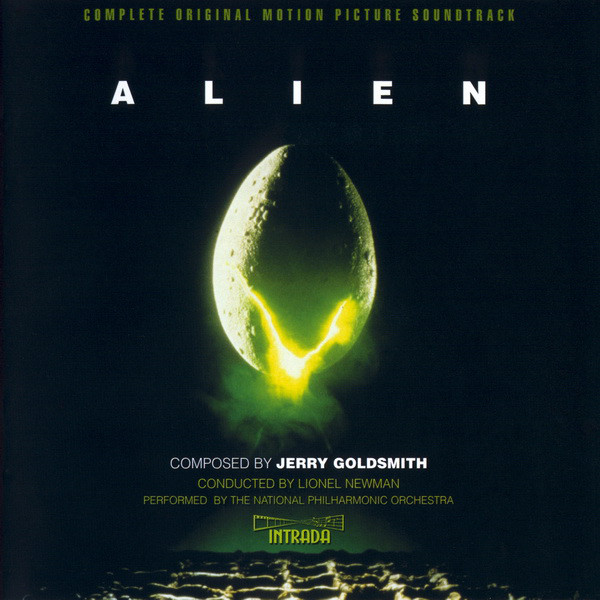
Composed by Jerry Goldsmith, Alien’s soundtrack is one of the most chillingly effective horror scores in film history, and most likely one of his most outstanding achievements. From the ghostly trumpet & flute melodies of its central theme to the sleek, spine-tingling textures and long-decaying echoes of its most suspenseful arrangements, Goldsmith’s craft relies on a carefully executed orchestration to full effect. It juxtaposes the cold emptiness of space with its stellar, awe-inspiring beauty.

Although, Jerry Goldsmith didn’t precisely score Alien’s opening credits as heard in the film. His take on the opening credits was a much calmer, romantic take on the vastness of space and its alluring grace – miles away from the straightforward and obscure version you hear in the film, which carries a slightly menacing and dissonant tone. Goldsmith originally intended these incongruous moments to be used later in the movie. Still, Ridley Scott and editor Terry Rawlings decided the film needed to convey horror right from the start. Which of the two opening themes was more appropriate? I think it boils down to cinematic taste or vision. The rather romantic motif, classically composed in glorious harmony that subverts the audience slightly; versus the horror inducing theme, focused on 2 major/minor chords played back & forth in a hexatonic scale, which amongst ghastly textures evokes instant dread.

Alien’s bony-chilling opening sequence is drenched in mystery and an overwhelming sense of dread.

Regardless of its brilliance and/or effectiveness, the music editing process of the film was, in fact, a complete disaster, and suffered from a colossally controversial post-production stage. From temp tracking to the final piece, both director and editor saw fit to chop Jerry Goldsmith’s music into bits and pieces, and even replacing it with cues from other scores he composed in the past, specifically 1962’s pseudobiographical movie “Freud”. Goldsmith’s ending theme for “Alien” was also, quite pointlessly, replaced by Howard Hanson’s opus “Symphony No. 2 – Romantic“. 

But however badly his work was treated, the effect of the final score on one’s psyche is quite a nerve-wracking, unforgettable experience. And while it may not quite compete with the Satanic heights of the composers score to “The Omen”, which was the composer’s only Oscar thus far, Alien’s sound structure conveys a very unique horror in itself. One that is both familiar and otherwordly, often blurring the lines between music score and diegetic sound (sound fx/foley). It expands our understanding of the world within the film itself in a game of tone and contrast. 

“A score without a range of different moments and moods will more often than not result in a movie soundtrack that has little to no dynamic range.” 

And while the theme of science fiction concerns a grasp of the known, horror is usually defined by the human struggle with the unknown and our quest to survive horrifying circumstances. Unless, of course, we talk about the likes of Jordan Peele and his cinematic depiction of real-life social horrors. Music in horror films plays an extremely critical role in establishing the requited amount of mystery, trepidation, and fear. In conventional horror movies, this seems quite a straightforward task, but when the mysterious beauty of space is a character on its own, quietness plays a fundamental role. That’s where the dynamic range of sound becomes extremely important, and an indispensable tool for emotional support.

LV236
In cinematic photography, the dynamic range is the difference between the darkest and lightest tones of a scene, what one might consider pure black and pure white. In sound, it describes the ratio between the quietest and the loudest noise in a musical instrument, musical arrangement or piece of electronic equipment.

A score without a range of different moments and moods will more often than not result in a movie soundtrack that has little to no dynamic range. Alien is a beautiful example of a soundtrack that has been carefully designed to have moments of calm quietness, often evoking a mixture of fear and awe, versus moments of intense action that result in high volume sound, music and dialogue.

It creates a structured experience, and the audio-visual dynamics grow from these structures as well, building the intensity of a moment before that specific intense moment actually occurs, driving the audience. Junji Ito comes to mind: page after page of his mangas usually grow slowly in tone and dread, only to deliver enormous shocks or to drop the reader into the uncanny valley after a simple page turn. Using such dynamics, he subdues the reader, and masterfully controls the narrative.

Uzumaki-eyeball
From right to left, the masterful subdued shocks of Shunji Ito.

Most of the film’s alien settings use quietness as a tool to elevate its otherwordly sounds and enable razor-sharp emotional manipulation. Long moments of calm allow clarity and provide the space and headroom needed for delicate gain staging, from the quietest wind to the loudest echo of strings and drums. These elements ebb and flow in a very dynamic and organic manner, and inject subconscious themes of gripping bodily invasion, attack and infection. But there’s a constant melodic cue that cuts through the film, evoking different emotions depending on its tempo, volume or tone.

Goldsmith’s known to employ flexible secondary motifs in addition to the central theme by using smaller repeated musical statements throughout the whole score  and in Alien there are specific timbres and melodies recurrently recalled. Virtually every cue has a life of its own that is born from the same core, something which assists the score’s musicality and motion. The Alien’s leitmotif, the 2-note and sometimes 3-note flute arrangement, is a constant: it continually reminds you everything alien, and the fact that it’s employed in its most introspective moments mutates it into something all the more terrifying.

“Long moments of calm allow clarity and provide the space and headroom needed for delicate gain staging”

32d5a61bb41209e681d1ec2515ff698a
Maestro-Echoplex-EP-2-Tape-Echo-Cover-3-1

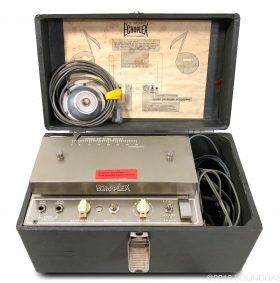
The scoring on LV-426 and the discovery and subsequent investigation of The Derelict ship is a great sonic representation of everything Alien. Goldsmith used his familiarity with acoustic and electronic elements to create an engaging atmosphere of atypical nature. The famous “alien wind” effect was generated using the Indian instrument Shankha run through the Echoplex tape delay machine – an industry standard for this effect at the time and the successor to the EchoSonic, one of the earliest magnetic tape delay & amplifier machines from 1959. Cues like “The Alien Planet” and “The Shaft” are an accurate depiction of incoming horror and aggressive action through the innovative use of echoes and reverbs on its orchestral and percussive parts.

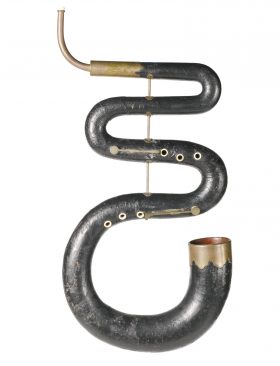
To create the sound for the alien and its world, Goldsmith used an array of intriguing instruments, including a Didgeridoo, original from the Australian Aboriginal tribes, and the Serpent, a unique wind instrument originally from France that resembles a giant snake – and a distant ancestor of the modern tuba. Goldsmith also used detuned wind and string effects to convey stress (influenced by Polish composer Krzysztof Penderecki). The wise use of magnetic tape delays on drums or these unusual instruments represents the terror of the unknown world and its ominous central creature. 

Some pieces like “Facehugger” or “Breakaway” demonstrate some of the composers most aggressive and challenging writing, making full use of the dynamic range by carefully mixing foley with instrumentation under precise volume shifting. These quiet moments contrasted by nervous sounds very quickly break-the-nerve of the listener and subconsciously implant ideas of severe aggression. It becomes a very feral experience.

Understanding dynamic range is key to achieving a good sound, just like understanding contrast is key to achieving the right image. Goldsmith’s soundtrack has vast differences between the loudest peaks in its cues and its quietest sounds, resulting in a very unique dynamic range – one that eventually requires a specific sound system to fully enjoy. 

“Understanding dynamic range is key to achieving a good sound, just like understanding contrast is key to achieving the right image.”

Considering the cinema nowadays is becoming more and more a living-room thing, such a soundtrack could feel either too loud or too quiet at times, primarily when heard in smaller sound systems / TVs. If we were to apply severe levels of compression to the soundtrack to achieve higher volume and a shorter frequency window we would gain an overall feeling of increased ‘loudness’ and virtually making it sound better in such environments. At the same time, loud moments would be toned down, and quietness wouldn’t be so mysterious, severely impacting the whole emotional articulation of all its parts.

I do believe, although, that such a score wouldn’t be nearly as dynamic nowadays; this is mostly due to the approach most current musicians and audio engineers have towards volume. The loudness range of the sound before mastering or even mixing has increased at the same time as compressing/limiting has been getting more dramatic, a tendency born out of the stylistic changes in music during the era of the ‘loudness war’ — aka the ’90s. This quest for volume became an industry standard, with platforms like Spotify employing Loudness Normalization with the use of digital limiter algorithms that quite often break the dynamic range of a track. These platforms state louder tracks have often been cited as sounding better to listeners, so normalization was employed to avoid unfair advantage between songs with different volumes or dynamic ranges.

“The loudness range of the sound before mastering or even mixing has increased at the same time as compressing/limiting has been getting more dramatic.”

I’m often puzzled by such perceptions of loudness and sound quality in music. They make me wonder if, for instance, ambient music mixes should be mastered or normalized. Virtually everyone would be able to listen to it clearly, even on lo-fi speakers, and accessibility should be a concern. But moments in the mix that should ebb and flow, be it in emotion or volume, would probably be spoiled and taken miles away from the original intentions of its creator.

In 2017, Mondo re-issued Alien’s OST in a gorgeous special edition 4xLP package that included both Goldsmith’s original vision and Scott’s edits, transferred, remastered and restored from the original multi-track tapes, and its native dynamic range impeccably preserved. But, however remarkable, the original soundtrack album, also re-issued by Mondo, remains the best way to listen to the score as envisioned by the composer: an utterly authentic soundscape of atonal motifs bookended by its Romantic theme. It elevated the original material from overblown b-movie to interstellar artistic heights and serves even today as a perfect example of pioneering sonic artistry full of character, where its details and dynamics make it a character of its own — the 9th passenger aboard the Nostromo.

Chronicles of the Five Senses

Chronicles
of the
Five
Senses

Teaser 6th Sense

Everything started with a deep thoughts to the artists in March 2020 just before Europe reached a total lockdown. The idea is simple: we are inviting people from our surrounding (producers, creatives, designers, makers etc.) to share something at the crossroads of their memories, passed experiences and the current times. Between sound translation and human adventure: listen, stick to the present moment to enter the past.

To launch this project we wanted to present it with a visual interpretation. Léro, kindly accepted to challenge himself by creating this video under the prism of the “6th sense”.

Born in Paris, based in Berlin, he is a video maker who finds his inspiration in the urban jungle. Member of the Finow Zoo collective, for him video creation is connected to music. He’s creating music videos, vjing and party teasers. Discover through this teaser a timeless notion brought by the author Aldous Huxley: “The Doors of Perception”.

https://www.facebook.com/leroberlin/
https://www.youtube.com/user/lerodu9/

Mindoor – Pit Spector’s first album to be released in August

Pit Spector

"Mindoor - Album"

Mindoor is the first album by Pierre Deniel aka Pit Spector. This album was produced in collaboration with 9 leading artists from the electronic music scene. This project for Logistic records is a continuation of the work provided by Pit for many years and which has already given birth to a series of several Maxis Ep initiated on his own label “Prospector”. On this first album Pit Spector surrounded himself with producers of geniuses such as: Dandy Jack, San Proper, Tin Man, The Mole, Cuthead, Ben Vedren, Ernesto Ferreyra, Dave Aju and Ark. 

“Vast landscapes of electronic music” 

These collaborations have enabled the learning and exchange of many production techniques leading to an album rich in color, eclectic not limited to any particular style. With Mindoor, Pit offers a unique journey into the vast landscapes of electronic music, sometimes sweet, groove, sexy – sometimes raw and funky. Each track has been precisely mixed by Pit Spector to create a homogeneous aspect despite different production techniques used for each track..


[VLS05] VA – V as Peace EP out soon

Evano & Nitz

[VLS05] VA - "V as Peace EP"

After 4 dancefloor oriented EPs, the penguins take a nap.. Expect some downtempo, ambient and experimental sounds from all over the world for this new release. Total playtime 52min. 200 copies Ltd.

“downtempo, ambient and experimental sounds”


VLS05 . VA – V for Peace EP

A1. His Inorganic Being – Sub-project-58
A2. Dices – Drawing a Blank
A3. Burago Jurchanie
A4. Nitz – Antinode
A5. Koyil SG Dub
B1. Evano – Grandel_s Musyc
B2. Koyil – Moondog
B3. Astral Conspiracy – Interstellar Rain
B4. IRS – Arp Way There
B5. IRS – Bowel Movement
B6. Sasha Nevolin – Advice Sharing